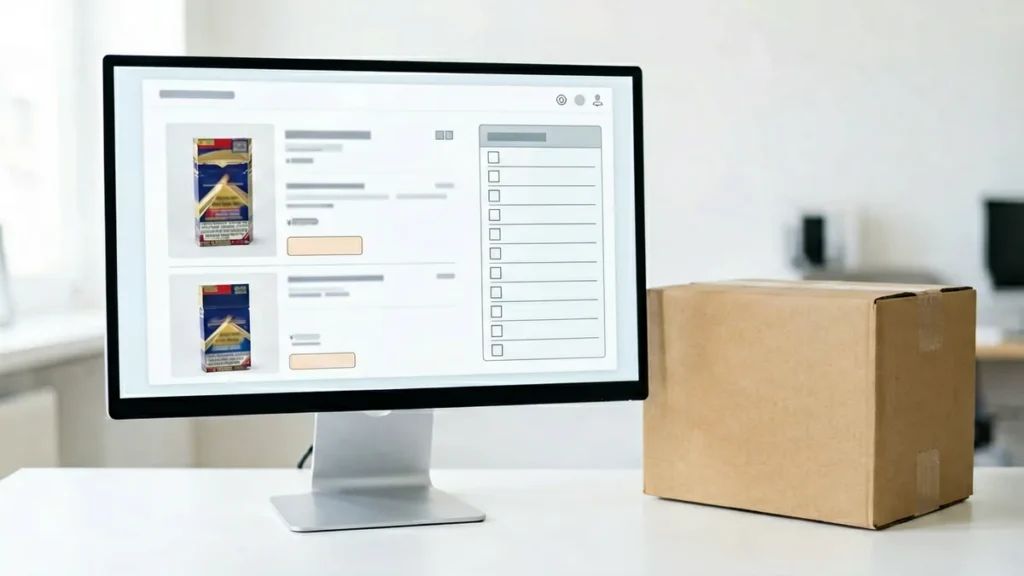
To check whether a carton sale price is current, open the exact live product record, match its complete title and SKU, then compare the regular price and the effective price shown there before reviewing the same record in the cart. A lower amount on a category tile, an old screenshot or a similarly named listing is not enough to confirm the current price for the carton you intend to select.
This guide is for Australian adults aged 18 or older using an adult tobacco catalogue. Tobacco contains addictive nicotine, and smoking causes serious health risks.
Start with the exact product record
Use the Rovqenx product directory or a relevant category to locate the record, then open its individual product page. Read the complete product title and SKU together. This avoids treating two products with similar brand wording as the same listing.
For example, the live catalogue check on 12 August 2026 showed Dunhill Blue 6mg Cigarettes – 1 Carton (10 Packs), SKU SS-386, as a distinct carton record. The example identifies the record only; it is not a recommendation and does not establish the price or availability at a later time.
Read the two price fields in context
A product can show a regular price and a current effective price. Where a sale is active, the effective price may be lower than the regular price. Read both values on the same exact live product page, and do not calculate a price from another product, an earlier promotion or a percentage mentioned elsewhere.
- Regular price: the reference amount displayed for that exact record.
- Effective price: the amount displayed for the same record at the time you are checking.
- Sale status: a current display state, not a promise that a price will remain unchanged.
- Sale unit: confirm what the listing says is being sold. Product records in this catalogue use carton wording such as 1 carton (10 packs); do not assume an individual-pack price.
The carton price comparison guide explains why an effective price should be read on the individual record rather than inferred from a brand range.
Recheck the cart immediately before proceeding
After selecting a record, open the cart and confirm the complete name, quantity and current amount again. Returning to the directory, changing quantity or switching variants can change what is displayed. The current product and cart screens are the practical records to use at that moment.
Rovqenx Terms and Conditions should also be read before an order. They are relevant to current catalogue information and order acceptance. An adult shopper should not rely on a remembered price or treat an earlier screen as confirmation.
Keep price, stock and order acceptance separate
A displayed price does not answer every purchase question. Stock status, cart contents, delivery eligibility and order acceptance are separate checks. Use the stock-status guide to review the current stock indicator, and use the pre-payment checklist before entering payment details.
If the record or cart looks inconsistent, pause rather than guessing. Take note of the exact product title, SKU and the time you checked it, then use the Rovqenx contact page for a product or order question. Do not include card numbers, security codes or online-banking credentials in a support message.
Quick checklist
- Open the individual live product page.
- Match the complete title and SKU.
- Confirm that the sale unit is the intended carton record.
- Read the regular and effective prices on that same page.
- Recheck the exact name, quantity and current amount in the cart.
- Read the terms and applicable policy information before proceeding.
FAQ
Does a sale price guarantee that an order will be accepted?
No. A current displayed price and order acceptance are separate matters. Review the current cart and the Terms and Conditions before proceeding.
Can I use a price from a similar product name?
No. Match the full title and SKU, then read the amount on the exact individual product page and in the cart.
When should I check a carton price?
Check it when selecting the product and again immediately before proceeding. Price and stock are time-sensitive commercial fields, so this article records a method rather than a price guarantee.